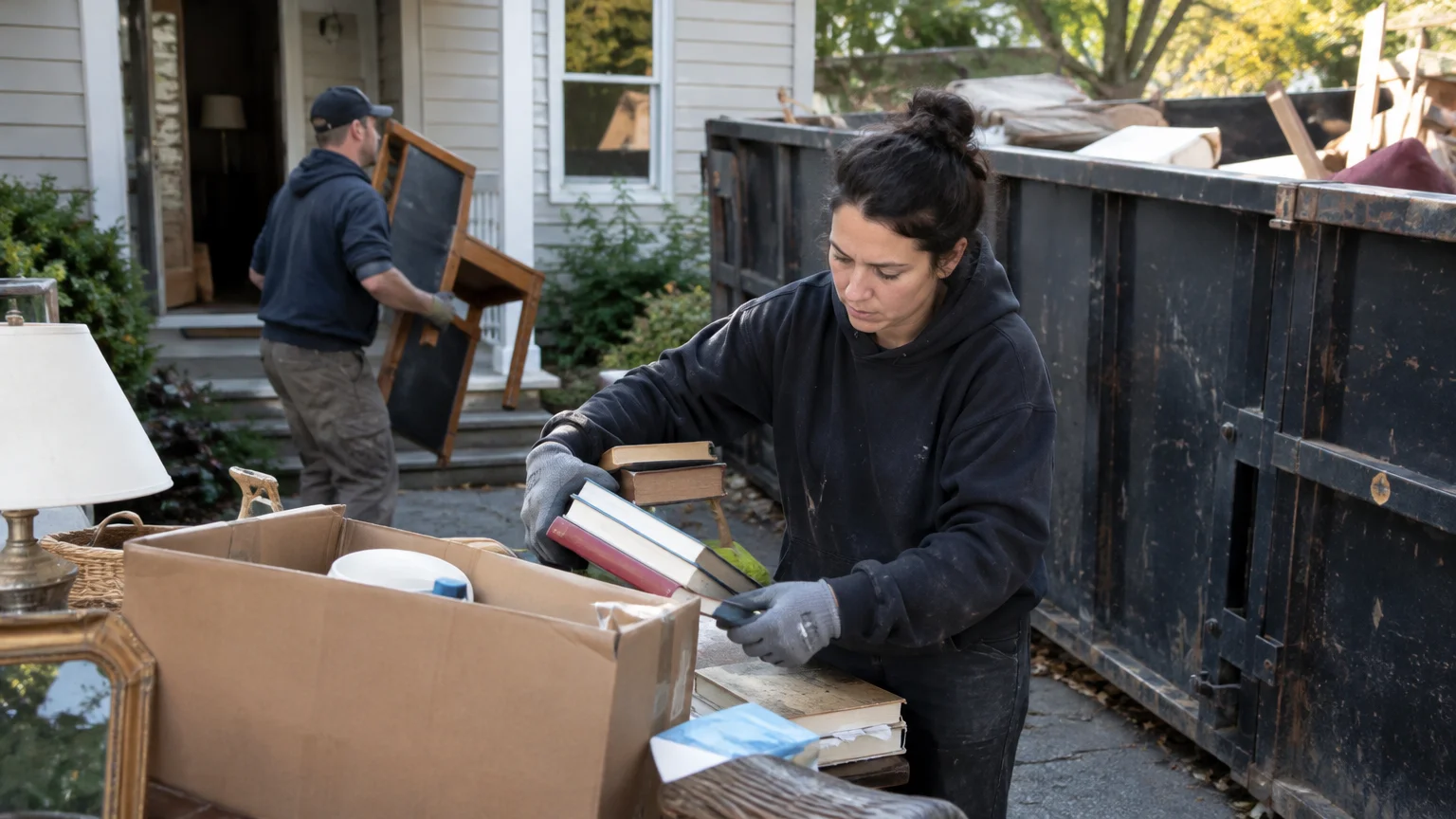
Estate cleanout vs dumpster rental depends on who will do the work, how soon the home must be ready, and what it contains. A cleanout crew sorts, lifts, loads, hauls, and disposes of items. A dumpster gives you a container, but you handle the labor and loading.
Table of Contents
- What is the difference between an estate cleanout and dumpster rental?
- When does an estate cleanout service make more sense?
- When is a dumpster rental a practical option for an estate?
- Which option is faster for preparing an inherited home?
- How do labor and responsibility compare between the two options?
- How should you sort belongings before clearing an estate?
- What happens to furniture, appliances, and household debris?
- How much does an estate cleanout compare with dumpster rental?
- What should you consider before choosing either option?
- Which estate cleanout option is the better fit for your property?
- Frequently Asked Questions
What is the difference between an estate cleanout and dumpster rental?
An estate cleanout service includes the work needed to clear a home. A crew may sort items, carry heavy pieces, load them, haul them away, and sweep the rooms. A dumpster rental only provides a container. The owner or helpers must move items and load the container safely.
This difference matters after a death, move, foreclosure, or major change at the property. An estate may contain furniture, clothing, dishes, books, papers, appliances, yard waste, and personal items. Some things may be donated or recycled. Other items may need special handling. A dumpster does not sort items or choose where they should go.
A cleanout service is hands-on. It can help when family members live far away, have little time, or cannot lift heavy objects safely. It may also help when the home must be ready for an agent, buyer, landlord, or new occupant.
A dumpster can work well for a simple removal job. The home may already be sorted, the items may be easy to carry, and strong helpers may be ready. The property also needs a safe place for the container and enough time to fill it.
The better choice depends on the home, schedule, and people available. Wake Forest NC Junk Removal can help property owners compare the work before they choose a plan.
When does an estate cleanout service make more sense?
An estate cleanout service makes sense when the home needs sorting, heavy lifting, and removal from many rooms. It can help with inherited homes, estates after a loss, foreclosure properties, and homes that have been closed for a long time. The service can reduce the work placed on the family or executor.
An executor is the person named to manage an estate. That person may need to protect papers, arrange donations, prepare the home for sale, and keep heirs informed. Handling every box and piece of furniture alone can make the job slow and hard.
A full-service crew may be a good fit when:
- The home has furniture, appliances, boxes, and debris in many rooms.
- Family members live outside Wake Forest or cannot visit often.
- The property must be cleared before a listing, closing, lease, or inspection.
- Heavy items need more than one person to move safely.
- The family needs help separating donations from regular waste.
- The home has stairs, narrow halls, limited access, or long paths to the truck.
A crew does not make decisions for the executor. Family members still decide what to keep, sell, donate, or discard. The crew can handle the physical work after those choices are clear.
This option may also help when emotions make the job difficult. Sorting a loved one's home takes time and care. A respectful team can follow instructions and avoid rushing through personal items. The goal is a clean, useful property while important belongings remain under the family's control.
When is a dumpster rental a practical option for an estate?
A dumpster rental may work when the estate is already sorted and several people can load the container. It may suit a home with a clear driveway, simple access, and mostly regular household debris. The owner must check local rules and confirm which materials the provider accepts.
A dumpster is less hands-on than a cleanout service. It does not carry items from inside the home. It does not separate donations, protect keepsakes, or choose the best disposal path for appliances and bulky goods. Those tasks stay with the people managing the estate.
Before the container arrives, arrange a safe placement area. The ground should be stable. The container should not block emergency access, shared drives, sidewalks, or nearby property. Some communities and property managers may require permission near a street.
The owner should also make a loading plan. Heavy furniture should not be placed where it can fall on someone. Sharp items need care. Chemicals, refrigerants, batteries, and other controlled materials should stay out unless the provider clearly allows them.
A dumpster may fit a short project with clear limits. It can be harder when the home has many rooms of mixed belongings. In that case, carrying, sorting, loading, and cleaning may take most of the time.
Which option is faster for preparing an inherited home?
A full-service estate cleanout is often faster when the home has many belongings or a firm deadline. A crew can move through rooms, carry items, load vehicles, and manage disposal during a planned visit. A dumpster project may take longer because the owner must find helpers and complete each step.
Speed depends on more than the home's size. Stairs, doors, parking, item weight, access, and sorting needs all affect the schedule. A smaller home may still take time when each box needs review.
A dumpster project has several stages. The owner must decide what leaves, gather people, move items, load the container, and clean the rooms. If helpers cancel or weather changes, the work may slow down. The rental period may also limit the time available.
A cleanout crew can help when an agent, buyer, landlord, or attorney needs the property ready soon. The crew handles physical work while the executor manages records, family updates, and legal duties. Clear instructions before work starts can prevent delays.
Urgent does not mean careless. Remove papers, photographs, jewelry, family records, and other keepsakes before general loading begins. A short written plan can show what stays, what leaves, and who makes final choices.
How do labor and responsibility compare between the two options?
With a dumpster, the homeowner, executor, or helpers handle most of the labor. They move items from rooms, stairs, attics, basements, and garages. They also load the container, keep items below its fill line, and clean the home after removal.
With a cleanout crew, the team can handle much of the physical work. Depending on the agreed service, this may include carrying, loading, hauling, sorting support, and a final sweep. The owner still controls personal choices and should mark anything that must stay.
The difference matters for older adults and people with injuries. Furniture, appliances, and packed boxes can be heavy and awkward. No one should lift an item alone when the path is narrow or the weight is unclear. Homeowners can handle light sorting, but heavy removal is better left to trained workers.
A clear work plan should list the rooms, items, access points, fragile belongings, and materials needing separate handling. It should also explain whether donations, recycling, or special disposal are part of the job. Written notes can reduce confusion among heirs and helpers.
Wake Forest NC Junk Removal can help property owners think through the work before they choose a removal plan. A local team may know common access concerns in Wake Forest, but the owner should still share every known issue before scheduling.
How should you sort belongings before clearing an estate?
Sorting should happen before general removal starts. First, protect personal items, legal papers, valuables, and things family members want to keep. Then separate donations, recycling, household waste, and items needing special handling.
A simple process can make a large home easier to manage:
- Gather heirs or decision-makers and agree on who can approve removal.
- Set aside wills, deeds, tax papers, account records, photographs, and medical documents.
- Mark items to keep, donate, sell, recycle, remove, or review later.
- Check drawers, closets, cabinets, garages, sheds, attics, and vehicles.
- Photograph rooms and valuable items before moving anything.
- Make a final walk-through before loading begins.
Labels should be clear and easy to see. A colored note can help, but written words are safer than color alone. Give family members time to review uncertain items. Rushing may cause the loss of items with personal or legal value.
A house cleanout sale may help with selected furniture and household goods. It is not a full removal plan. Items that do not sell still need another destination. Donation groups may accept usable goods, but each group has its own rules.
Homeowners can sort light items and basic papers themselves. They should avoid unknown containers and unsafe materials. A professional should handle heavy, unstable, or possibly dangerous items.
What happens to furniture, appliances, and household debris?
Furniture and appliances need a removal plan because they are large and heavy. A crew may remove sofas, beds, tables, cabinets, washers, dryers, refrigerators, and other bulky items when accepted. The final destination depends on condition, material, and local rules.
Usable furniture may go to a donation group or resale channel. Metal appliances may be sorted for recycling. Broken items may go through regular disposal. Refrigerators, freezers, air conditioners, and other items with refrigerant may need special handling. Batteries, paint, fuel, cleaners, and chemicals should not go into a dumpster unless the provider confirms acceptance.
Old mattresses also need planning. Rules can vary by facility and provider. The same is true for televisions, computers, tires, propane containers, and fluorescent bulbs. Ask before placing these items in a container or truck.
Yard debris can bring more concerns. Branches, leaves, and storm debris may have separate drop-off rules. People who need to know where to drop off tree branches near Wake Forest should check the local facility or ask the removal provider about accepted materials.
A hot tub is another bulky item. Removing one may involve draining it, disconnecting utilities, cutting the shell, and moving heavy pieces along a safe path. Power and water connections must be handled safely first. A removal crew can explain what preparation is needed.
How much does an estate cleanout compare with dumpster rental?
The total cost of an estate cleanout or dumpster rental depends on the work involved, not just the number of rooms. Main factors include debris volume, labor, access, loading needs, disposal rules, rental time, and material types. The final cost is confirmed on a quote for the property.
A dumpster may seem simple when helpers are ready and the debris is ordinary. The owner still needs to count the time and effort for sorting, carrying, loading, and cleaning. A longer rental period may change the total. Extra handling may also be needed for items that cannot go inside.
A full-service cleanout includes more labor. It may make more sense when the home has heavy furniture, many rooms, stairs, long carry paths, or a short deadline. A mixed load also needs more planning than one pile of similar debris.
Access can affect either choice. A container may be hard to place at a home with a narrow drive. A crew may need more time when trucks cannot park near the door. A clean, sorted home is also different from one with blocked paths.
The best question is not only which option seems less costly. Ask which option fits the labor, time, safety needs, and disposal plan. Property owners should request a clear quote and ask what work, materials, and cleanup it includes.
What should you consider before choosing either option?
The right choice becomes clearer after reviewing the property and the people available to help. A short checklist can prevent a rushed decision. It should cover access, time, labor, item types, family needs, and the condition required at the end.
Before choosing, consider:
- Who has legal authority to decide what leaves the property?
- Which rooms, outbuildings, vehicles, and yard areas need clearing?
- Are there stairs, narrow halls, locked gates, or long paths to the truck?
- Can enough helpers work safely during the available time?
- Must the property be ready for sale, rent, inspection, or closing?
- Are there appliances, chemicals, batteries, mattresses, or electronics?
- Which items must be donated, recycled, sold, stored, or kept?
The executor may also need to work with an attorney, real estate agent, landlord, property manager, or insurance company. Each person may have different needs. Written approval can help when several heirs share responsibility.
A dumpster may fit a simple, planned project. A full-service cleanout may fit a mixed project with little available labor. Some owners may use both choices at different stages, but disposal rules should be clear first.
Check the home for safety before work begins. Blocked walkways, unstable stacks, mold, pests, or damaged floors can change the plan. Homeowners can manage light cleaning and sorting, but they should not enter unsafe areas or move unstable loads without help.
Which estate cleanout option is the better fit for your property?
A dumpster rental is often a better fit when the home is sorted, helpers are ready, access is easy, and the owner can manage loading. An estate cleanout service is often better when the property needs hands-on labor, careful sorting, bulky-item removal, or a faster turnaround.
The emotional side matters, too. Clearing an inherited home can be hard for families. A respectful crew can handle physical work while relatives focus on decisions and meaningful belongings. The service should follow the family's instructions and treat the property with care.
Key takeaways
- A dumpster provides space, but the owner manages the labor.
- A cleanout crew can sort, carry, load, haul, and sweep.
- Important papers and keepsakes should be protected before loading.
- Appliances, mattresses, chemicals, and electronics may need special rules.
- The best choice depends on time, access, labor, property condition, and disposal needs.
For a hands-off project, Wake Forest NC Junk Removal can help property owners plan an estate cleanout around the home's condition and deadline. Contact us to discuss the property and next step.
Frequently Asked Questions
What is a cleanout service?
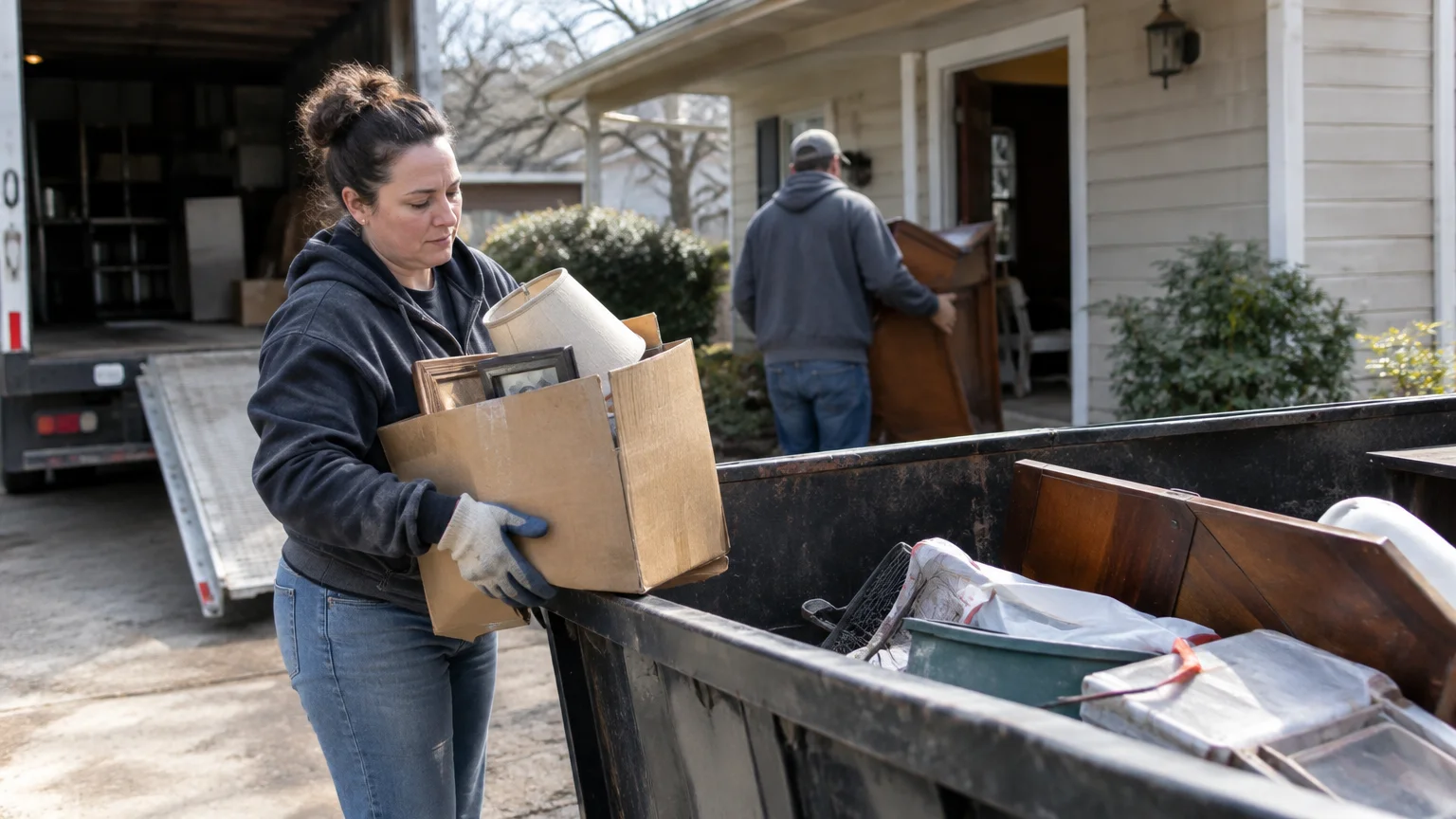
A cleanout service removes unwanted items from a property. The work may include sorting help, carrying, loading, hauling, disposal, and sweeping. It can help with inherited homes, foreclosures, moves, hoarding situations, and whole house cleanouts. The owner still decides which personal items stay.
Can I put a mattress in a dumpster?
That depends on the dumpster provider and local disposal rules. Some providers accept mattresses, while others require separate handling. Ask before placing one inside. A cleanout company may explain the available removal route. Never leave a mattress beside a container without clear permission.
What happens to old appliances?
Old appliances may be donated, recycled, or disposed of based on their condition and materials. Refrigerators, freezers, and air conditioners may need special handling because of refrigerant. Share an appliance list before removal. Never disconnect electrical, gas, or water lines unless the work is safe.
How can someone get rid of an old hot tub?
An old hot tub may need draining, utility disconnection, cutting, and careful removal. Its size and location affect the safe plan. A homeowner should not cut electrical lines or move heavy sections alone. A removal crew can review the access path and explain what preparation is needed.
How should a family choose between estate cleanout companies?
Families should compare the work scope, accepted materials, schedule, access plan, disposal process, and cleanup details. Ask who handles sorting, heavy lifting, appliances, donations, and final sweeping. A clear quote should explain the planned work. The company should also communicate well with the executor and heirs.
If you are unsure what you are dealing with, have someone review it before the job grows. Wake Forest NC Junk Removal can help you understand the next step.
If you are not sure what you are dealing with, it is worth having someone look at it before it turns into a bigger job. Get in touch with Wake Forest NC Junk Removal today and we will tell you where you stand.