The best way to learn how to get rid of an old couch is to check its condition, measure the path out, and choose reuse, donation, recycling, bulk pickup, or hauling. The safest choice depends on damage, local rules, access, and how quickly the couch must leave a home or business.
Table of Contents
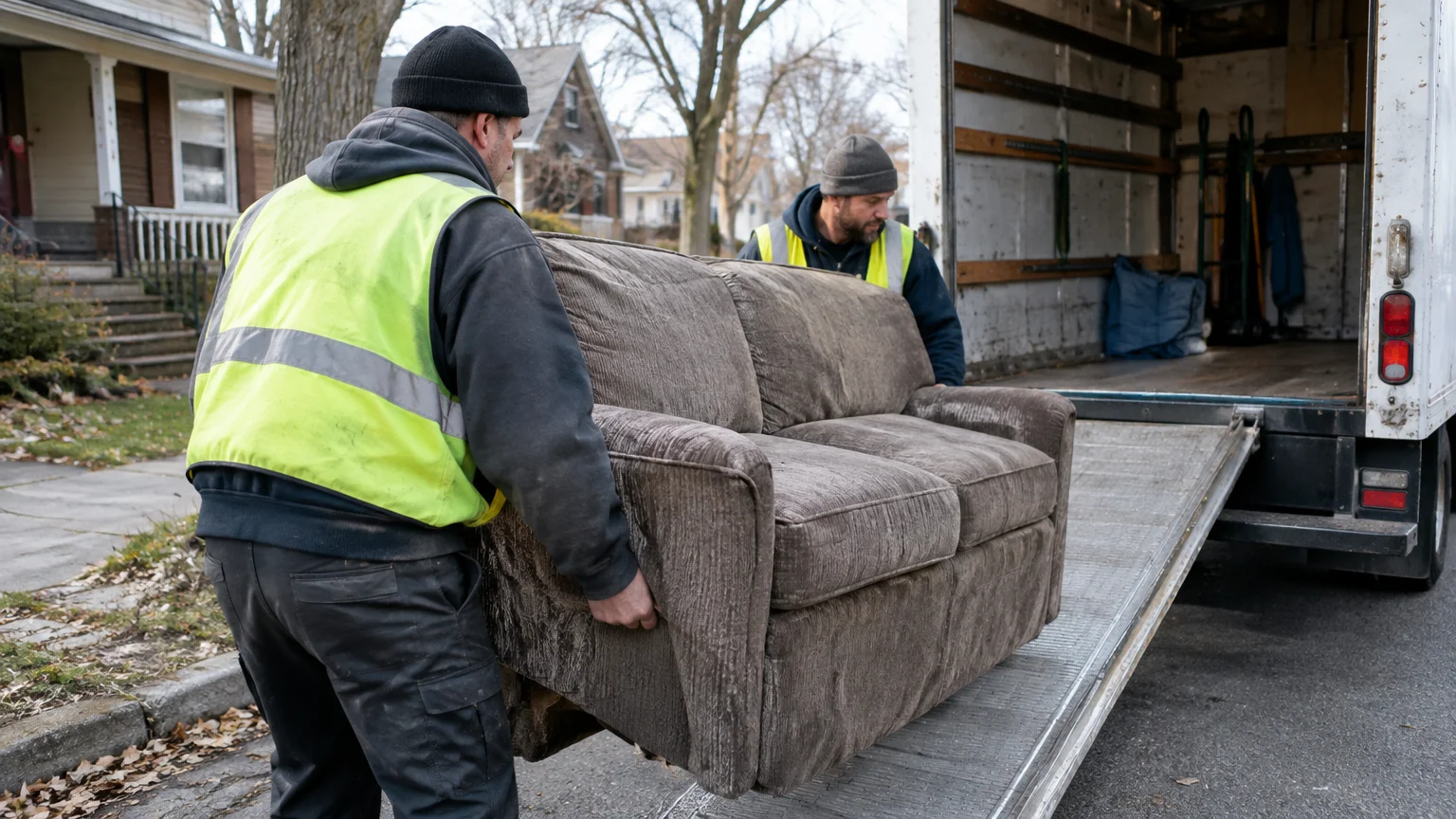
- What Should You Do With an Old Couch?
- Can You Donate an Old Couch?
- When Is Selling or Giving Away a Couch Worthwhile?
- How Do You Recycle an Old Couch?
- Can You Leave an Old Couch Out for Bulk Collection?
- How Much Does It Cost to Get Rid of an Old Couch?
- How Can You Move a Couch Without Heavy Lifting?
- What Happens During Professional Couch Removal?
- How Should Businesses Handle Old Couches and Office Furniture?
- What Is the Best Way to Get Rid of an Old Couch?
- Frequently Asked Questions
- Key Takeaways
What Should You Do With an Old Couch?
Start by checking the couch and deciding whether it still has a useful life. A clean, safe sofa may help another household. A stained, broken, wet, or pest-damaged couch usually needs a different plan.
Decide Whether the Couch Can Be Reused
Check the fabric, frame, cushions, legs, and springs. Small marks or loose buttons may be easy to fix. Strong odors, mold, bedbugs, water damage, and a broken frame are more serious problems. These issues may make donation unsafe or unlikely.
Measure the couch before choosing a removal method. Write down its length, depth, and height. Then measure doors, halls, stairs, gates, and elevators. A couch may fit in a room but still fail to fit through the exit.
Also check whether the couch has a sleeper bed, recliner parts, or a powered section. These features add weight and may change how the couch should move. Never cut a couch apart without checking for springs, wires, or moving parts.
Choose Between Donation, Recycling, and Removal
Donation works best when the couch is clean and usable. Selling or giving it away may work when the item still has value and the owner can wait. Recycling may be an option when a local facility accepts upholstered furniture.
Professional removal is often useful when the couch is heavy, damaged, hard to reach, or needed out quickly. Wake Forest NC Junk Removal can help Wake Forest property owners compare safe options without asking them to lift the item alone. The right choice protects people, the property, and the local waste stream.
Can You Donate an Old Couch?
A couch can be donated when it is clean, safe, and ready for another person to use. Each charity has its own rules, so check acceptance before moving the sofa outside.
Donation Requirements for Sofas and Sectionals
Many groups look for couches with clean fabric, a firm frame, working cushions, and no strong odor. Some will not accept items with stains, tears, pet damage, smoke smell, or pest signs. A sectional may need to be checked as separate pieces.
Ask about pickup areas, stairs, wait times, and size limits. Some groups accept only certain furniture types. Others may ask the donor to bring the couch to a drop-off site.
Describe the condition honestly. A charity cannot help another family if the donated item needs major repair. When the couch is not suitable, a furniture removal service or recycling center may be a better choice.
How to Prepare a Couch for Donation Pickup
Remove blankets, toys, remote controls, and items under the cushions. Vacuum the fabric and clean it with a product made for that material. Let damp fabric dry fully before pickup.
Take clear pictures if the group asks for them. Show the whole couch, damaged spots, stairs, and the path to the door. This helps the group decide if the pickup is safe and useful.
Do not put the sofa at the curb unless the charity tells you to do so. Outdoor exposure can cause new stains and water damage. Keep pets and children away from the moving path on pickup day.
When Is Selling or Giving Away a Couch Worthwhile?
Selling or giving away a couch makes sense when it is clean, usable, and easy for the next owner to collect. A worn or oversized sofa may get little interest, even if it once had a high retail value.
How Condition, Size, and Style Affect Interest
Good photos and honest details matter more than a long listing. Buyers want to know the couch size, age, fabric, color, comfort, and condition. They also need to know if the home has pets or smokers.
Large sectionals can be useful but hard to move. A sleeper sofa may interest some buyers but weigh more than a standard couch. A small loveseat may be easier to give away because it fits more rooms and vehicles.
A couch with a broken frame, deep stains, missing cushions, or pest concerns should not be offered as usable furniture. Safe disposal is better than passing a problem to another home.
What to Include in a Couch Listing
A useful listing should include:
- Exact measurements and the number of pieces
- Clear photos taken in good light
- Fabric, color, brand, and main features
- Honest notes about stains, tears, odors, or pet use
- Pickup details, including stairs, elevators, and door access
State whether the buyer must bring help and a suitable vehicle. Do not let a stranger enter an unsafe area or carry the couch without a clear plan. If nobody responds after a reasonable time, another disposal choice may save effort.
How Do You Recycle an Old Couch?
Couch recycling means separating useful materials so less furniture goes to a landfill. Options vary because not every facility has the tools or staff needed to handle upholstery.
Which Couch Materials May Be Recovered
A couch may contain wood, metal springs, foam, fabric, plastic, and other materials. Some facilities can recover the frame or metal parts. Others accept only certain pieces after the couch is taken apart.
Do not assume a regular recycling bin can take a sofa. Upholstered furniture is too large for most curbside programs. It may also contain mixed materials that need special handling.
Before taking anything apart, check the manufacturer label. Look for fasteners, wires, and springs. Wear work gloves and eye protection if the facility allows residents to prepare parts. If you are not comfortable with tools, leave the work to trained workers.
Why Recycling Options Vary by Location
Local facilities set rules based on their equipment, permits, staff, and demand. One community may accept furniture while another accepts only metal or clean wood. Rules may also change during storms, building work, or facility updates.
Search for the local solid waste office, transfer station, or recycling center. Ask if the site accepts upholstered couches, sleeper sofas, and sectionals. Confirm preparation rules before making the trip.
In Wake Forest, residents can also ask Wake Forest NC Junk Removal about furniture pickup when a couch cannot be donated or handled safely. This can help with tight halls, upper floors, and bulky items that need more than curb placement.
Can You Leave an Old Couch Out for Bulk Collection?
A couch may be accepted through local bulk collection, but the owner must follow community rules. These rules often cover booking, placement, pickup days, item limits, and weather.
How Local Bulk-Pickup Rules Usually Work
Ask the local waste department whether a couch counts as bulk waste. The department may need an appointment or may collect large items on set days. Some areas ask residents to place furniture at the curb shortly before pickup.
Keep the couch away from cars, mailboxes, hydrants, and power equipment. Leave a clear path for workers and avoid blocking sidewalks. If the couch stays outside too long, rain and pests may make it harder to reuse or recycle.
Rules can differ by neighborhood, property type, and community. Apartment residents may need approval from a manager. Businesses may follow separate commercial waste rules.
Common Problems With Curbside Couch Disposal
Curbside disposal can fail when the item is too large, placed out too early, or set out without an appointment. A crew may also skip a couch that is wet, covered in waste, or hard to reach.
Wind can move cushions into traffic or nearby yards. Rain can add weight and harm the fabric. A couch left outside may also create complaints or break local property rules.
When pickup timing is not clear, a scheduled furniture removal service gives the owner a better plan. The couch can stay indoors until the crew is ready to move it.
How Much Does It Cost to Get Rid of an Old Couch?
The cost of couch disposal depends on the item, property, access, and method chosen. Donation and local programs may follow different rules than private hauling. The final cost is confirmed on a quote after the removal details are reviewed.
What Factors Affect Furniture Removal Costs
One couch is often simpler to handle than several large pieces. A sectional, sleeper sofa, or powered recliner may need more care because it is heavier or has separate parts. Extra furniture, mattresses, appliances, or bags can also change the job.
Access is another key factor. Long halls, narrow doors, stairs, elevators, gates, and parking limits may affect the work. The distance to the truck and the need to protect walls or floors can matter too.
Urgency and local disposal rules may also affect the service plan. Wake Forest NC Junk Removal can review the couch, access, and other items with Wake Forest property owners before the final quote is confirmed.
How Couch Removal Compares With Other Disposal Options
Selling or giving away a usable couch may avoid hauling work, but it can take time. It also depends on finding a suitable recipient. Donation may help when a group accepts the item and can schedule pickup.
Bulk collection may suit residents who can wait and follow local rules. Recycling may reduce waste when a nearby facility accepts the materials. Private removal is often better when the couch is damaged, oversized, or hard to move.
The best choice balances safety, time, condition, and local rules. Compare the full effort instead of choosing only the first option available.
How Can You Move a Couch Without Heavy Lifting?
A couch should be moved with a clear path, enough people, and the right tools. One person should not carry a heavy sofa alone, especially on stairs or around tight corners.
Why Sofas Are Difficult to Move Safely
Couches are wide, soft, and hard to grip. Their weight is not always balanced, and cushions can shift during movement. Door frames and walls can get damaged when people rush or twist the sofa.
Clear the path first. Remove rugs, tables, lamps, toys, and other items. Open doors fully and protect sharp corners. Measure the narrowest turn, not just the doorway.
A couch may need to tilt, turn, or move upright. These moves can strain backs and trap fingers. Never put hands under an unstable frame or stand below furniture on stairs.
When Professional Couch Hauling Makes Sense
A homeowner may move a light loveseat with help when the path is short and level. Simple cleaning and preparation do not require a professional. Moving a large sofa through stairs, tight halls, or a busy office is different.
Professional crews have moving tools, lifting methods, and truck space. They can plan the route and manage the item without asking one person to carry the full load. This helps when the owner has an injury, limited help, or a firm deadline.
Share details before scheduling. Photos of the couch, doors, stairs, elevators, and parking area can help the crew prepare.
What Happens During Professional Couch Removal?
Professional couch removal usually starts with a review of the furniture and its path out. The crew then protects the property, moves the couch, loads it, and takes it to an appropriate reuse, recycling, or disposal outlet.
How Pickup and Hauling Typically Work
The owner explains what must go and points out access concerns. The crew checks the couch for hidden items, loose parts, and safe lifting points. If the plan changes, the owner should receive an updated quote before work continues.
The couch is moved through the planned route and loaded into a suitable vehicle. Usable items may go toward reuse when accepted. Damaged furniture may go through disposal or material recovery based on local options.
Remove personal items before the crew arrives. Keep children and pets away from the work area during pickup.
How Crews Protect Floors, Walls, and Doorways
Crews may use moving blankets, straps, dollies, corner guards, and careful lifting methods. They should keep doors open safely and watch for trim, railings, lights, and walls.
Property owners can help by clearing the route and pointing out fragile surfaces. Mention elevators, locked gates, narrow parking areas, and building rules before pickup.
A careful crew does not rush through a tight space. If the couch cannot fit safely, the crew should explain the next option instead of forcing it through a doorway.
How Should Businesses Handle Old Couches and Office Furniture?
Businesses should plan couch removal around customers, workers, tenants, and building rules. A clear plan limits trouble and helps keep the work area safe.
Removing Sofas From Offices, Rentals, and Commercial Spaces

Office sofas may sit in reception areas, break rooms, waiting rooms, or shared lounges. Rental properties may contain couches left by tenants or damaged during a move. Each setting can have different access and timing needs.
Managers should check for personal items, keys, papers, and electronics before removal. They should also ask building management about loading zones, elevators, insurance rules, and approved work hours.
Businesses may have more than one item. A couch removal plan can include chairs, tables, desks, mattresses, and other bulky furniture. Grouping work into one visit may simplify scheduling, but the owner should describe every item clearly.
Planning Removal Around Tenants, Customers, or Employees
Schedule work when fewer people use the area. Place signs near the work zone and keep walkways open. If the furniture is in a shared building, notify tenants and staff about noise, access, and timing.
A manager should assign one person to meet the crew and confirm the items. That person can provide keys, unlock doors, and answer questions about the building. Photos sent before the visit can reduce delays.
Wake Forest NC Junk Removal serves homes and businesses in the main Wake Forest area, from Downtown Wake Forest and Heritage to Youngsville, Rolesville, Raleigh, Franklinton, and nearby communities with plans for bulky furniture pickup. In Wake Forest, clear scheduling can help a property owner remove an old couch while normal work continues.
What Is the Best Way to Get Rid of an Old Couch?
The best method depends on condition, access, timing, and local rules. Reuse is a strong choice for a clean couch. Recycling or bulk collection may work for some damaged items. Professional removal is often safest when the couch is heavy or hard to reach.
A Practical Couch Disposal Checklist
Use this checklist before choosing a disposal method:
- Inspect the fabric, frame, cushions, and hidden areas.
- Measure the couch and every part of the removal path.
- Remove personal items and clear doors, halls, and stairs.
- Ask a charity, buyer, or recycling facility about acceptance rules.
- Check local bulk-pickup rules before placing anything outside.
- Share photos and access details when arranging furniture removal.
Do not move a couch alone when it is heavy, unstable, or blocked by stairs. Do not place damaged furniture outside without knowing the collection rules. A careful plan lowers injury risk and helps prevent a rejected pickup.
When to Contact a Local Furniture Removal Service
A local service can help when donation is not available, recycling rules are unclear, or the couch cannot be moved safely. It may also help with couch and mattress removal, office furniture, and other bulky items during cleanouts.
Wake Forest NC Junk Removal can help property owners review the removal plan and choose a practical next step.
Frequently Asked Questions
Can an old couch go in a dumpster?
A couch may not fit safely in a small dumpster, and many waste providers have special rules for upholstered furniture. Ask the provider before placing it inside. A local bulk program, recycling site, donation group, or furniture removal crew may be a better option.
How do people get rid of a couch and mattress together?
Couch and mattress removal can often be planned as one furniture pickup, but list both items before scheduling. Mattresses may have separate handling rules because of their size and materials. The crew should know about stairs, elevators, tight doors, and other access issues.
Can a wet or stained couch be donated?
Most donation groups want clean furniture that another person can safely use. A wet, moldy, pest-damaged, or strongly stained couch may be refused. Ask the organization first and choose recycling or professional removal when the couch is not fit for reuse.
What happens to an old couch after removal?
The next step depends on its condition and local facilities. A usable couch may go to reuse. Parts may be separated for material recovery, while badly damaged furniture may go to an approved disposal site. You can ask the service how items are handled.
Do homeowners need professional help to remove a couch?
No. A light couch may be moved safely by capable adults when the route is clear and level. Professional help makes more sense for heavy sleepers, sectionals, stairs, tight turns, injuries, or limited assistance. Nobody should risk a back injury or property damage to avoid asking for help.
Key Takeaways
- Inspect the couch before choosing donation, resale, recycling, bulk pickup, or hauling.
- Measure doors, halls, stairs, elevators, and turns before planning movement.
- Confirm local rules before leaving upholstered furniture at the curb.
- Never lift a heavy or unstable couch alone.
- Share access details so the final quote and removal plan are accurate.
Conclusion
Learning how to get rid of an old couch starts with an honest condition check and a safe removal plan. A clean couch may be reused, while a damaged or oversized one may need recycling, bulk collection, or professional hauling. Careful measurements and local rule checks prevent many problems.
For homeowners, landlords, offices, and property managers, the right choice saves time and lowers the risk of damage. Wake Forest NC Junk Removal helps Wake Forest residents handle bulky furniture with a clear, practical process.
If you are unsure what to do, Contact us today to arrange old couch removal. Wake Forest NC Junk Removal can help you plan access and handling.
If you are not sure what you are dealing with, it is worth having someone look at it before it turns into a bigger job. Get in touch with Wake Forest NC Junk Removal today and we will tell you where you stand.